


If you spend enough time around packaging lines, you eventually notice something interesting: carton sealers show up in almost every industry, even in places where people don’t expect them. They’re the quiet machines in the corner—steady, predictable, not flashy. But the truth is, many modern supply chains would crumble without consistent carton sealing.
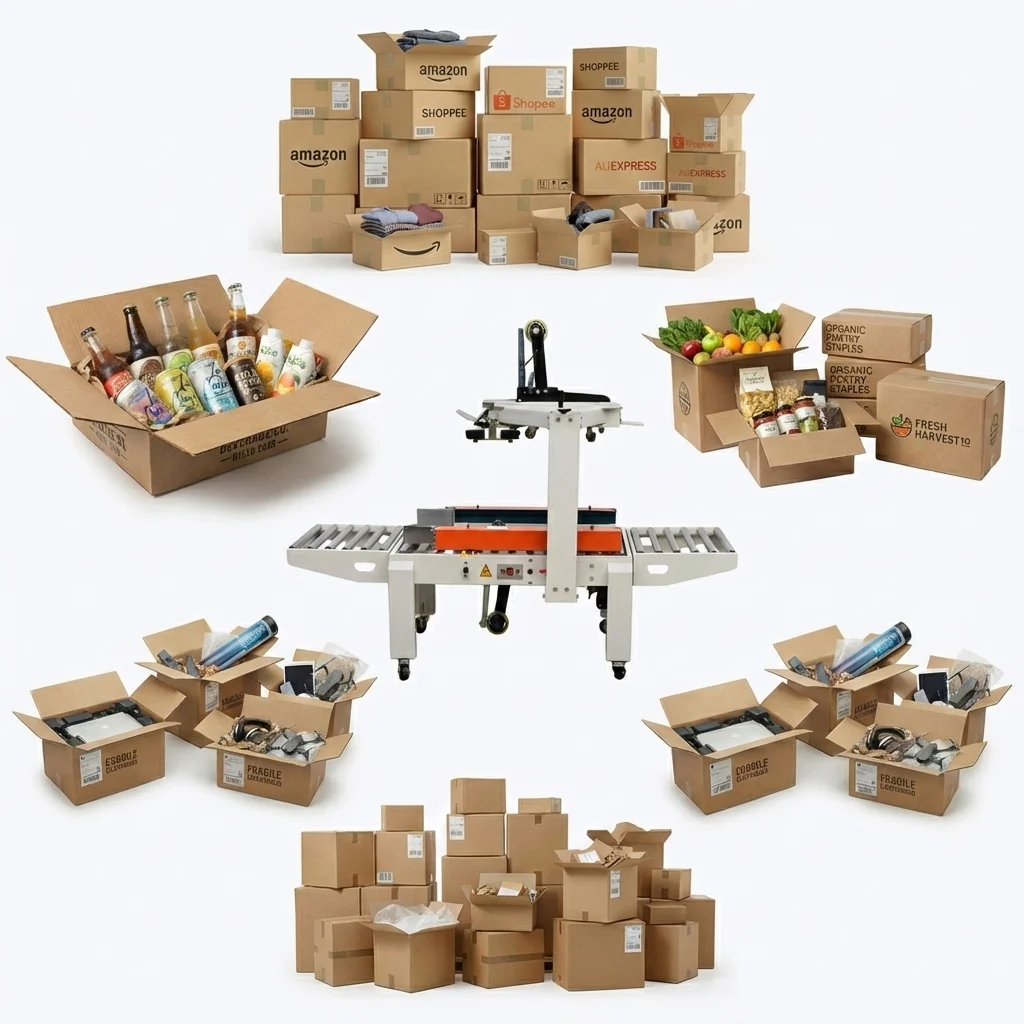
Companies usually start looking at packaging automation when labor becomes unpredictable or volume spikes beyond what manual taping can handle. That moment happens in almost every sector sooner or later. And once it happens, the first machine most teams consider is a carton sealer. If you haven’t explored what a carton sealer is yet, this guide pairs well with our introduction: What Is a Carton Sealer.
Different industries use sealers for different reasons—speed, safety, sanitation, consistency, or simply to relieve workers from repetitive strain. What follows isn’t a generic list but a look at real habits I’ve seen across warehouses and factories, from fast-moving e-commerce to the slow and steady world of electronics assembly.
For broader packaging industry context, IndustryWeek offers insightful coverage of manufacturing and operational trends.
E-commerce
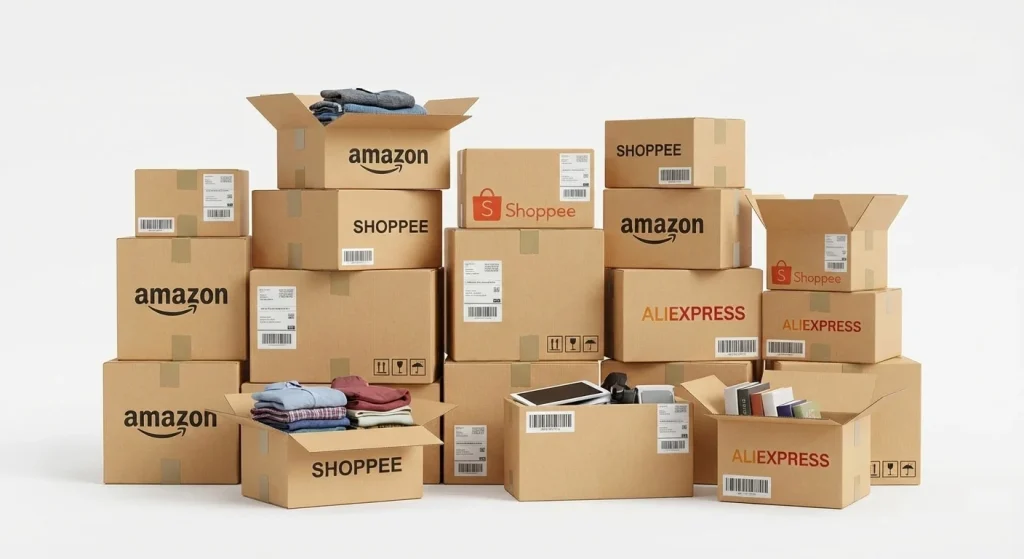
E-commerce facilities were the first places where I realized just how chaotic packaging can become. Orders don’t arrive in neat batches. They come as waves driven by marketing pushes, unexpected buyer behavior, or platform algorithms. In some fulfillment centers, mornings look dead quiet—and then a single influencer mention can spike order volume fivefold in an hour.
That volatility is exactly why carton sealers became essential in this industry. Workers can’t tape boxes manually at the same speed the order system produces packing slips. And because e-commerce uses a wide mix of box sizes, random-size carton sealers are the star here. They adjust their height and width on the fly, sealing each incoming carton without hesitation.
This flexibility also affects how managers choose machines. Many operations that run six or seven box sizes find it useful to read guides like How to Choose the Right Carton Sealer, because the wrong choice can choke productivity during peak sales events.
Another detail often overlooked: e-commerce shipping labels require clean surface areas and consistent sealing. Carriers reject packages that are crushed, poorly taped, or not sealed fully across the center. Automated sealing keeps everything neat and carrier-approved, minimizing chargebacks.
When carton sizes vary dramatically, some teams even refer back to measurement guidance: How to Measure Carton Size Before Buying a Sealer, especially when the sealer will serve both small accessory boxes and bulky return shipments.
Food
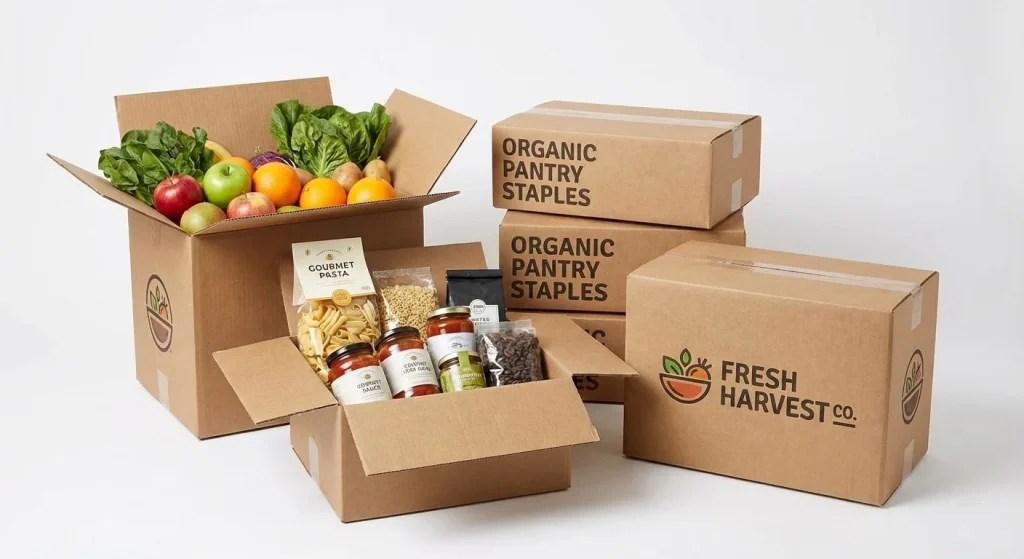
The food industry depends on speed and hygiene. Packaging is often part of a time-sensitive chain—products needing immediate sealing after weighing, sorting, or inspection. Whether it’s dry goods, frozen items, or chilled shipments, carton sealing plays a major role in keeping operations stable and sanitary.
Many food plants run in cold or damp environments. Carton sealers built for this sector often have stainless-steel frames, moisture-resistant motors, and corrosion-safe components. Tape adhesion changes in cold rooms as well, so the tape head performance becomes critical. In fact, I’ve seen teams waste more time troubleshooting tape issues than any other part of the sealer. That’s why many rely on standard, high-tension tape heads instead of cheaper alternatives that jam easily.
Because sanitation rules are strict, operators prefer machines with open-access designs. Quick cleaning reduces downtime and supports compliance audits. Many food facilities also pair sealers with metal detectors or checkweighers, and reliability is more valuable than raw speed.
When teams debate automatic vs semi-automatic models, this internal link comes up frequently: Automatic vs Semi-Automatic Carton Sealer.
Electronics
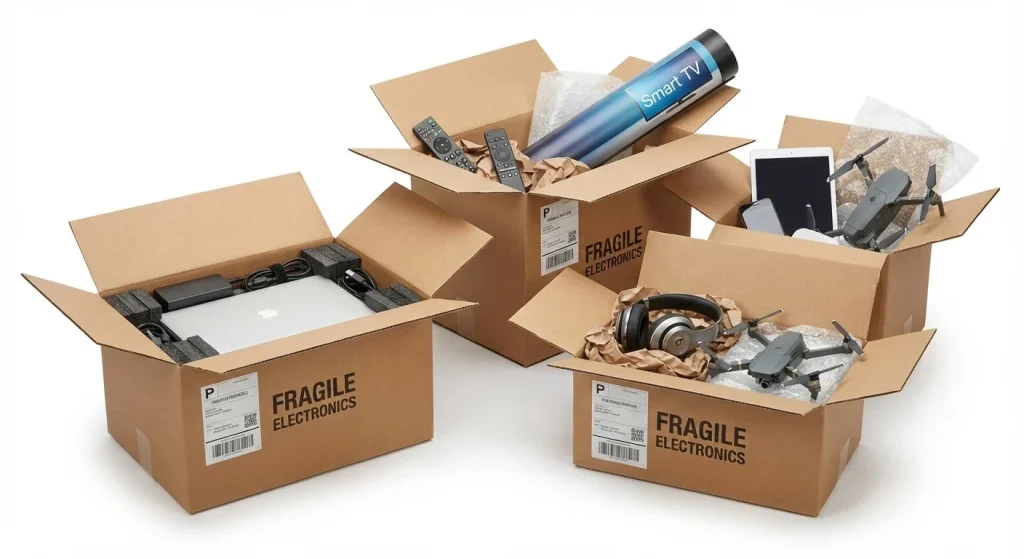
Electronics factories have a very different personality from food plants. They’re quieter, cleaner, more controlled. But they also require extreme carton consistency—especially for items with sensitive components or precision-molded packaging inserts.
In these factories, the biggest challenges are static safety, fragile contents, and damage-free transport. So the role of the carton sealer is not just sealing—it’s preventing mishandling. A clean seal ensures that shock indicators, barcode labels, and moisture-sensitive packaging stay intact.
Electronics products usually ship in medium-volume batches using standardized cartons. Semi-automatic sealers are extremely common here because box variations are fewer and workers already operate at steady rhythms. But during model launches or peak manufacturing cycles, automatic sealers often take over to keep output predictable.
Electronics companies also pay close attention to carton dimensions. A small mismeasurement can misalign protective inserts, so they routinely refer to measurement guides to avoid costly mistakes. One commonly referenced resource is: How to Measure Carton Size Before Buying a Sealer.
And because electronics assembly lines emphasize preventive maintenance, teams frequently review guides such as: Carton Sealer Page for model options, or What Is a Carton Sealer for fundamentals when training new hires.
Logistics
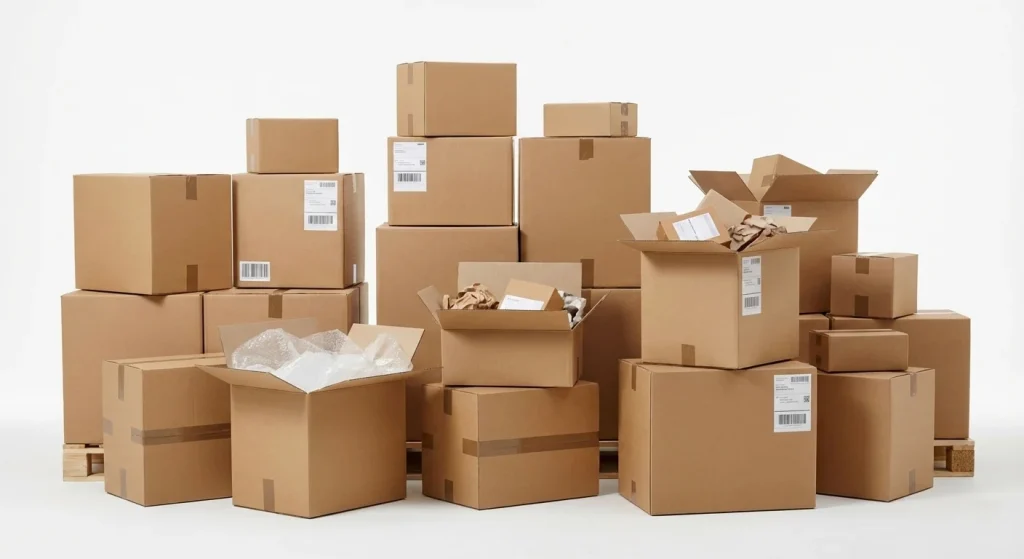
Logistics companies—especially 3PLs—use carton sealers because their business model depends entirely on throughput and reliability. They handle products from dozens or hundreds of different brands, so box styles vary widely. One hour they may pack toys; the next hour, premium cosmetics; the next, spare parts.
This diversity makes random-size sealers almost mandatory. A logistics line stops being profitable the moment operators must repeatedly adjust machine width or height. Random sealers keep work flowing without the “wait, let me adjust it again” interruptions that lead to backups.
Another reason sealers are essential in logistics: sealing quality affects carrier damage claims. A weak or crooked tape line increases the odds of a claim, and logistics companies absorb those costs more often than people realize. Machines deliver consistent pressure and tape adhesion, reducing disputes and liability.
Logistics managers also tend to think long-term. They look at package uniformity, box strength, and the role of sealing in the broader supply chain. Many look back to industry fundamentals—like our introduction: What Is a Carton Sealer—to align sealing equipment with carton specifications and shipping conditions.
In logistics hubs handling seasonal peaks, sealers with tool-less adjustments and long-duty cycles usually outperform cheaper models that require frequent tuning.
Beverages
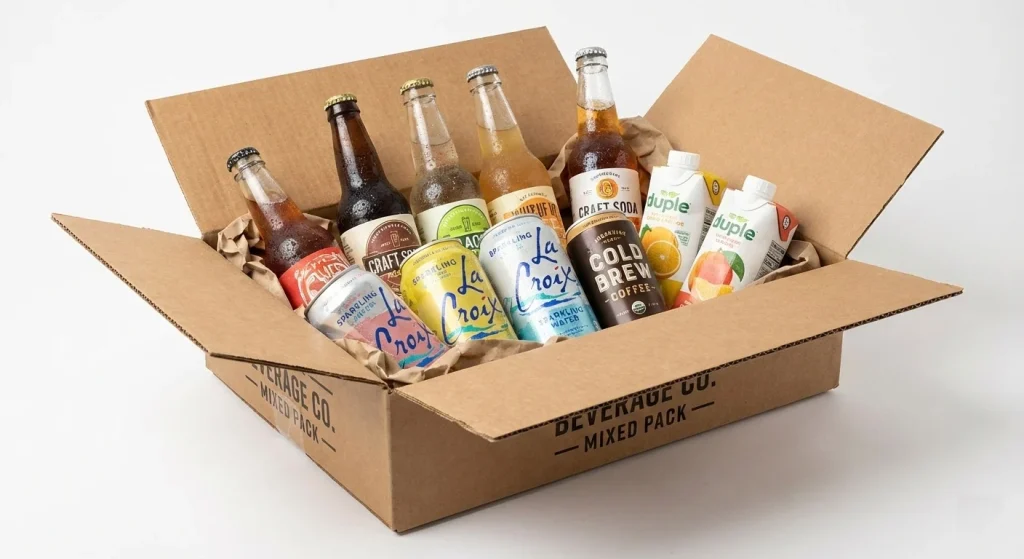
The beverage industry blends the challenges of food, logistics, and heavy packaging. Cases of bottled drinks are heavy, wet, and sometimes unstable. Many factories struggle with cartons that bulge slightly because bottles shift during transport from filling to packing.
Carton sealers here must handle weight consistently. Side-drive belts often work better because they maintain pressure along the box’s upper structure. Standard bottom-drive systems sometimes fail to grip heavy cartons, causing misfeeds. In some breweries, engineers even customize belt friction to match their specific case weight.
Sealers also prevent a subtle but common issue: bottle caps or condensation weakening carton tops. By sealing quickly after case packing, the line reduces exposure to moisture and preserves box rigidity.
Because beverage facilities run long hours, reliability matters more than fancy features. Maintenance routines become part of daily shift changes, and managers frequently reference comparison guides to choose equipment that survives wet floors, rapid cycles, and temperature fluctuations: How to Choose the Right Carton Sealer.
Industries that ship glass products also lean heavily on accurate carton sizing. If the internal dividers don’t align with the carton dimensions, breakage risks multiply. Measurement accuracy is so important that many teams revisit our guide: How to Measure Carton Size Before Buying a Sealer.
Final Thoughts
Every industry uses carton sealers for its own reasons, but the underlying theme is the same: consistency. Whether it’s a massive 3PL moving thousands of SKUs or a quiet electronics plant sealing fragile assemblies, everyone benefits when tape application becomes predictable and repeatable.
Carton sealers may not be the flashiest machines, but they anchor the packaging workflow across countless factories. They reduce labor strain, improve presentation, and keep shipments moving without drama. And as more industries face labor shortages and rising operational expectations, the value of stable automation only increases.
If you’re still deciding which equipment fits your sector, the best next step is understanding carton properties and machine selection, starting with: How to Choose the Right Carton Sealer.